
Mobile Cleaning Recovery Recycle System Vehicle (MCRRS)
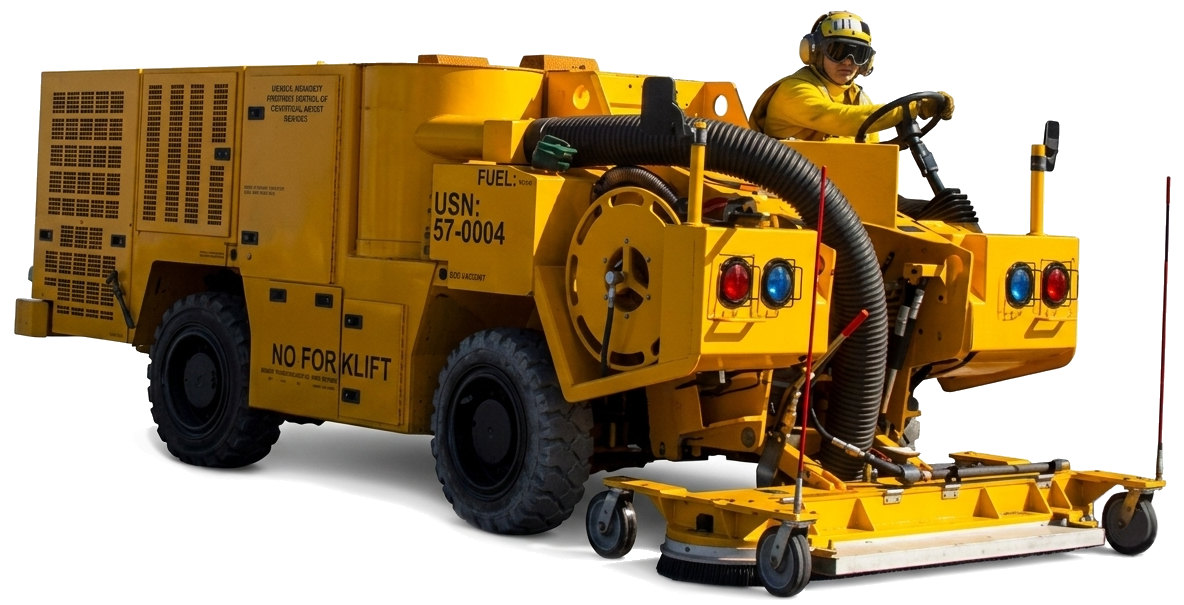
Unprecedented Cleaning Performance for Aircraft Carrier Operations
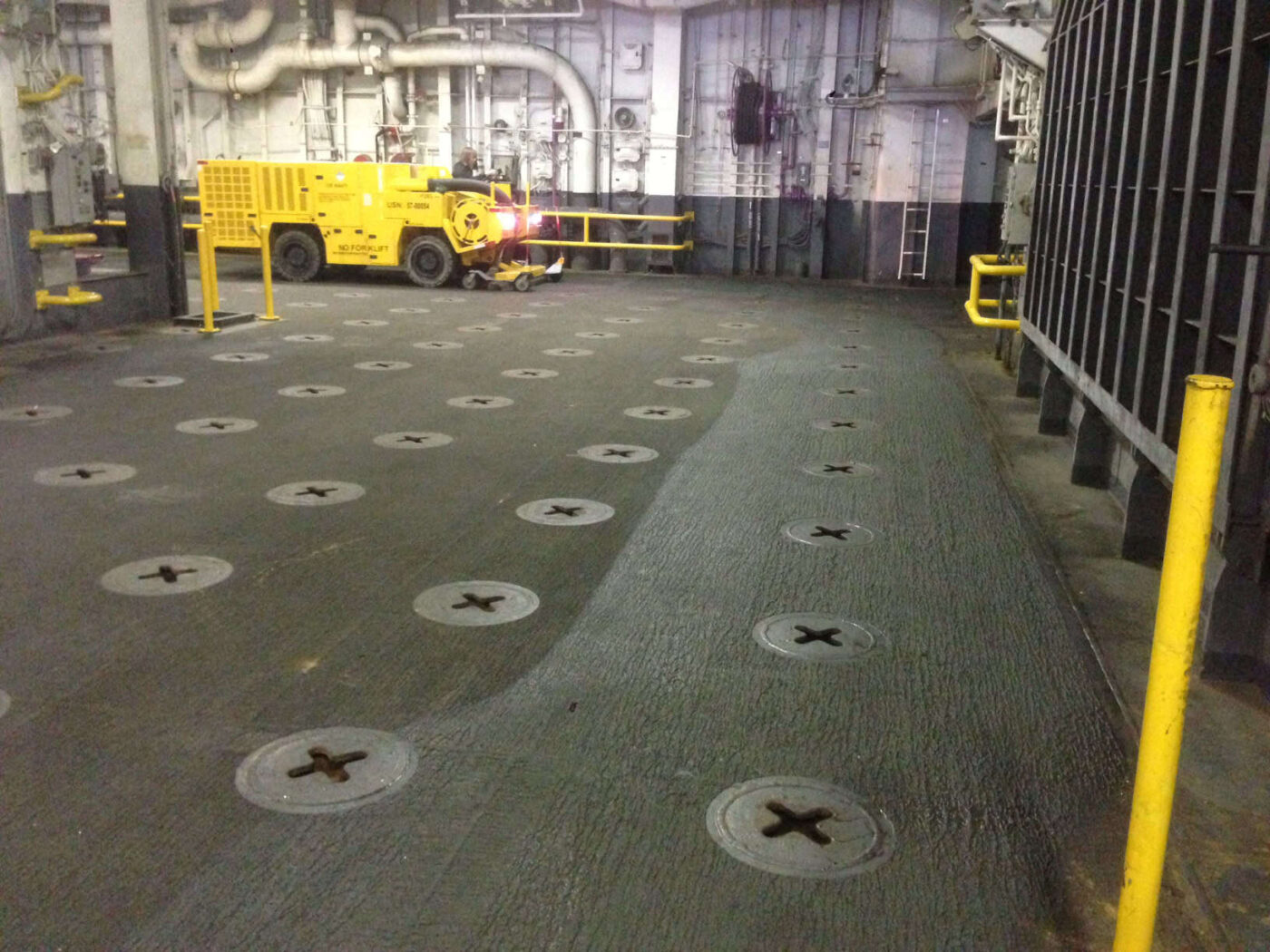
The Triverus MCRRS was developed in partnership with the Naval Surface Warfare Center Carderock to restore the coefficient of friction on aircraft carrier non-skid coated surfaces — a mission-critical requirement that directly affects safe flight operations. Through SBIR partnership with the U.S. Navy’s Office of Naval Research, the MCRRS uses the patented Clean Loop® closed-cycle process to clean, recover, and recycle water continuously throughout a full cleaning shift.
The MCRRS achieves cleaning rates of 5,000–20,000 ft²/hr and classifies recovered solids from 1/4 inch down to 5 microns — capturing material that conventional methods leave behind. It drastically reduces wastewater generation and disposal volume compared to manual SCRUBEX methods, making it both operationally superior and environmentally responsible.
MCRRS Specification Sheet
Coefficient of Friction Test Results
| Test Condition | COF Before | COF After |
|---|---|---|
| USS Bataan — Deteriorated + Oil/Grease Stained Non-Skid | 0.47 | 0.74 |
| Lab — Overnight Hydraulic Oil Spill on Non-Skid | 0.304 | 1.146 |
CVN 69 Norfolk, VA, August 2006. Testing per NAVSEA requirements.
Key Capabilities
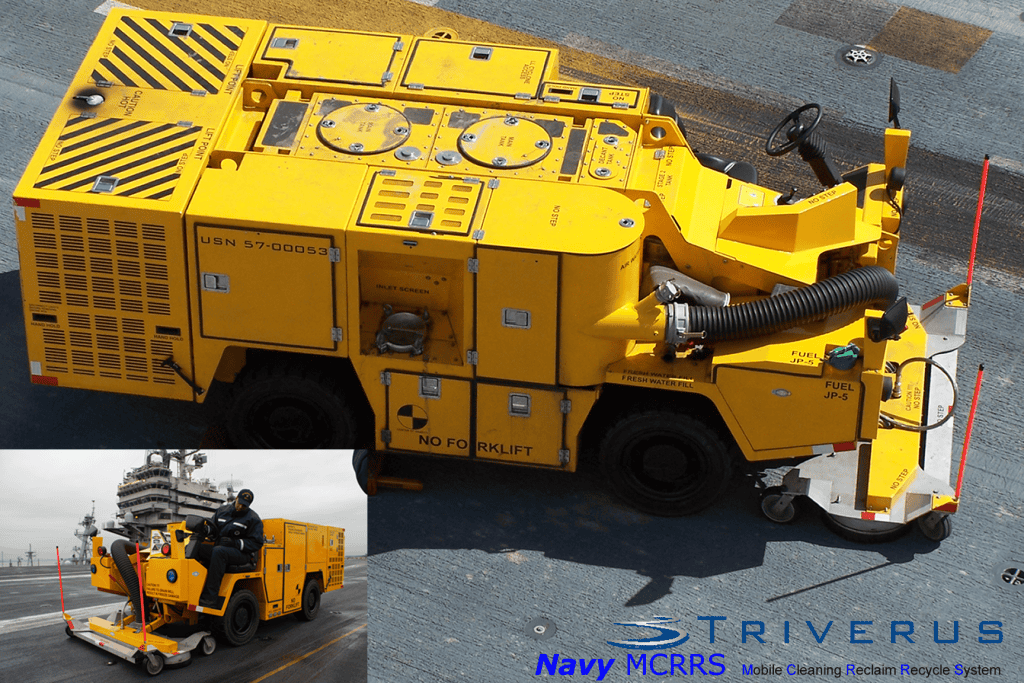
Clean Loop®: Continuous Water Recovery and Reuse
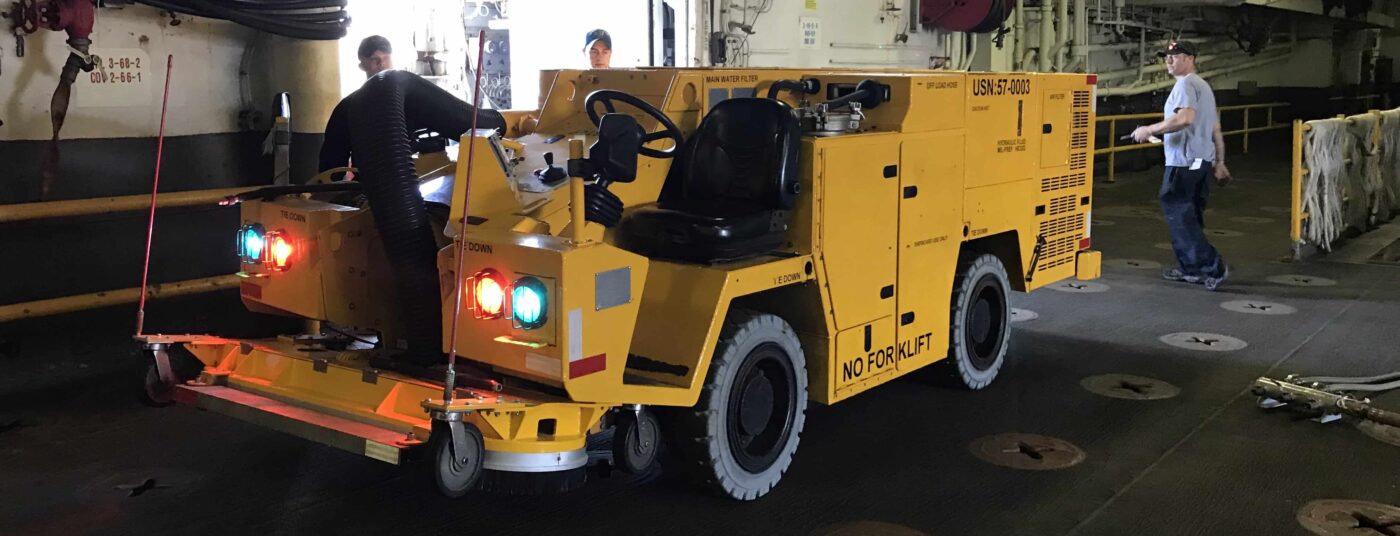
Traditional flight deck cleaning methods generate large volumes of wastewater that must be collected and disposed of — a significant logistical burden aboard ship. The MCRRS eliminates this bottleneck through the Clean Loop® process: pressurized water is sprayed onto the surface, recovered along with contaminants, classified through a series of solids separation stages, and returned to the spray system for continued cleaning.
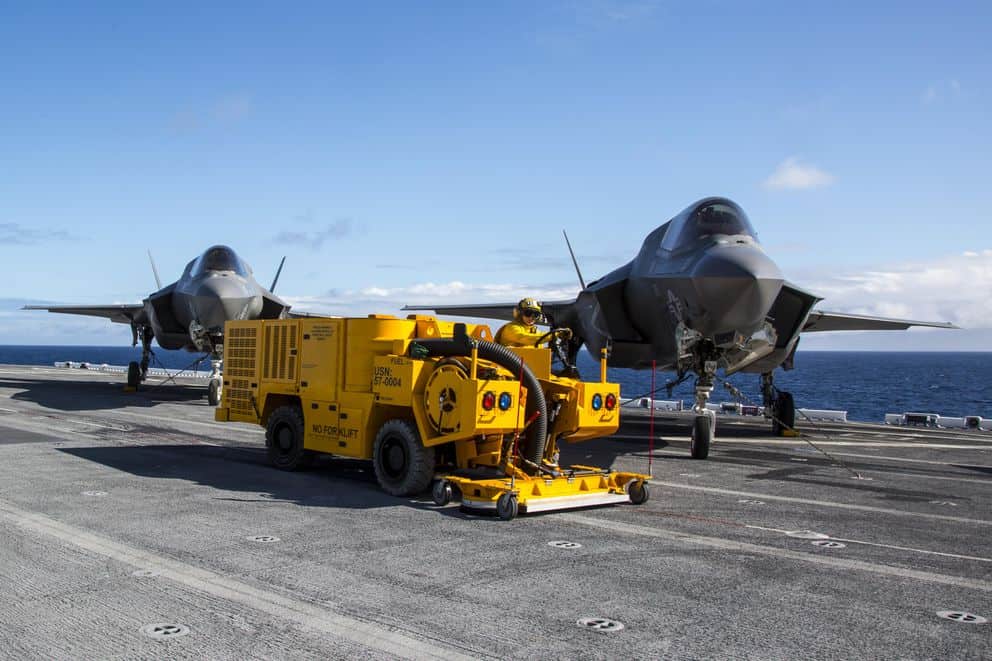
Proven to Restore Coefficient of Friction on Non-Skid Surfaces
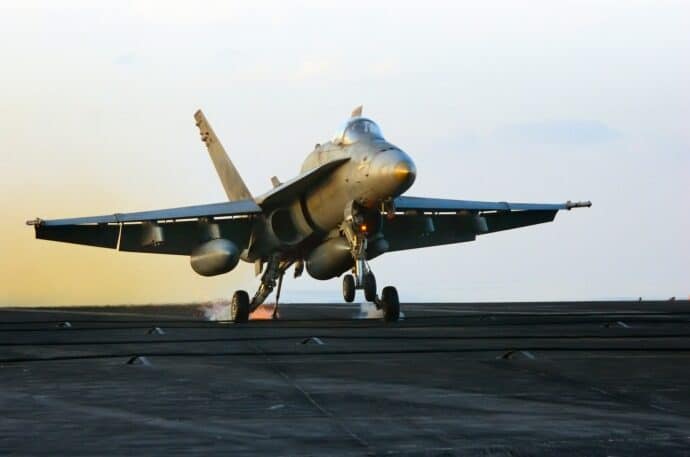
Non-skid coatings on aircraft carrier flight decks degrade over time from aircraft exhaust, hydraulic fluid, oil, and JP-5 contamination. Reduced coefficient of friction directly threatens aircraft and personnel safety. The MCRRS is the only mobile cleaning system validated to restore COF on deteriorated and contaminated non-skid to safe operating levels in a single pass — without damaging the underlying coating.
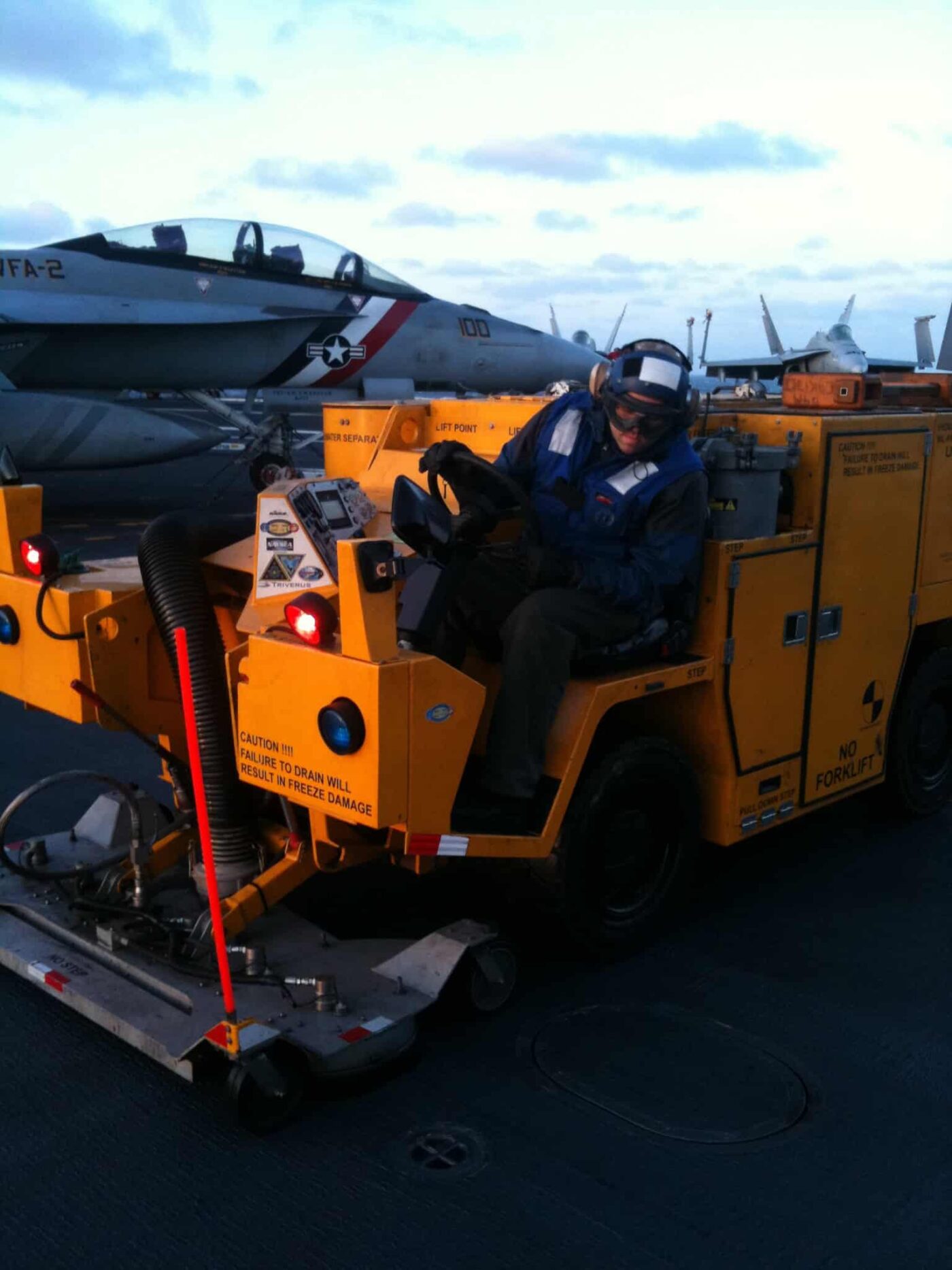
Designed for the Demands of Shipboard Flight Operations
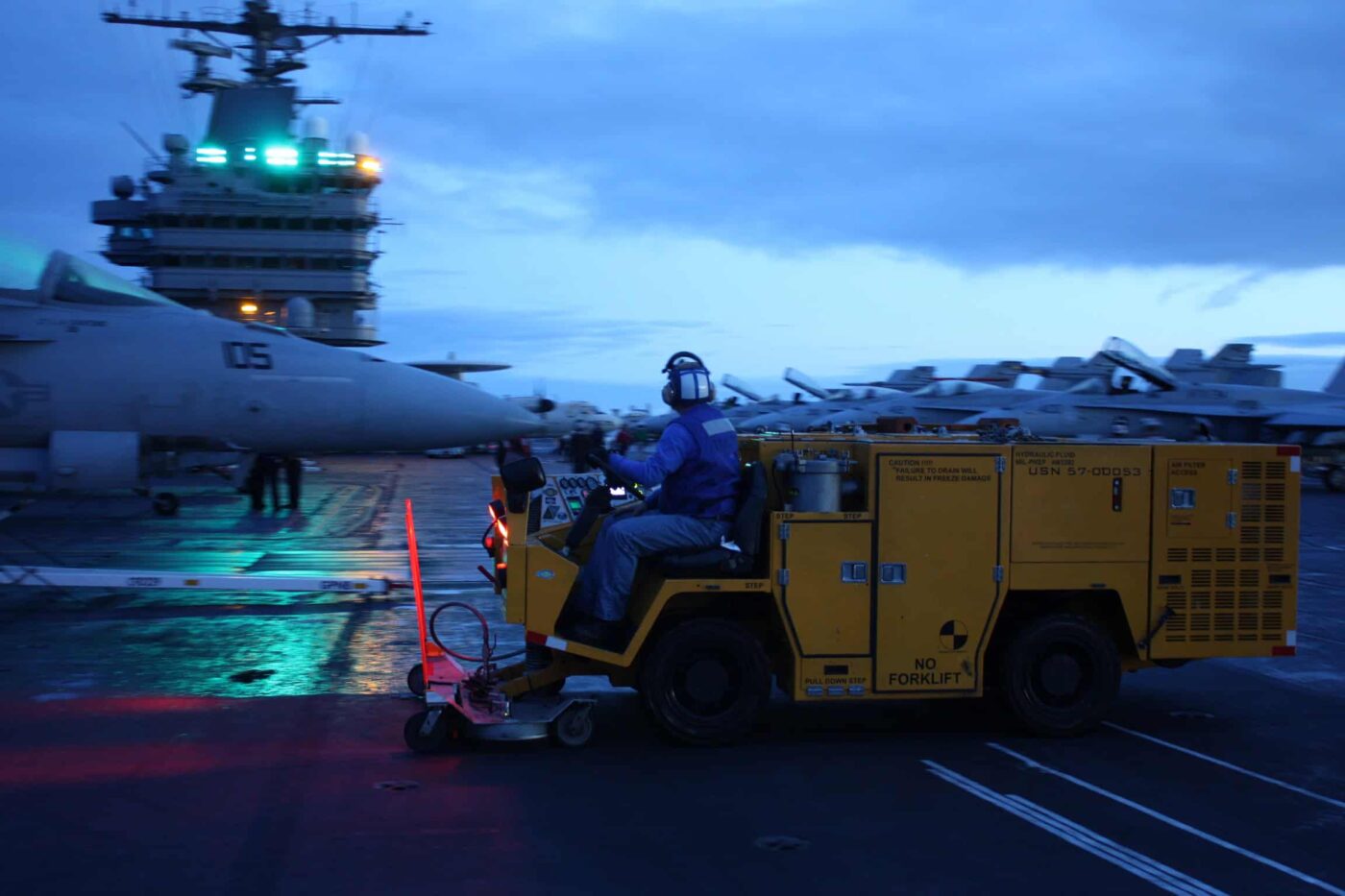
The MCRRS was purpose-engineered to meet the operational constraints of active aircraft carrier duty — maneuvering on the flight deck, compatibility with shipboard fuels (JP-5), and in-port cleaning without environmental discharge. Its 14-foot turning radius and three steering modes allow it to navigate the complex geometry of a flight deck while maintaining full cleaning effectiveness.
Military-Grade Engineering for Mission-Critical Reliability
The MCRRS is built to military long-lifecycle conventions rather than commercial COTS standards. Stainless components, high safety factors, and durable construction ensure serviceability in demanding shipboard environments. The Quick Engine Change (QEC) system allows plug-and-play power plant replacement — swapping the engine without specialized tooling for maximum operational availability.
MCRRS in Action
Resources & Documentation
Frequently Asked Questions
How does the MCRRS compare to manual SCRUBEX methods for flight deck cleaning?
The MCRRS significantly outperforms SCRUBEX in both cleaning effectiveness and operational efficiency. While SCRUBEX relies on manual labor and generates large wastewater volumes requiring separate collection and disposal, the MCRRS uses the Clean Loop® process to reuse water throughout an entire cleaning shift and concentrates waste into a smaller solid fraction for reduced disposal volume.
What coefficient of friction improvement can be expected after MCRRS cleaning?
COF improvement depends on initial surface condition and contamination type. In validated testing on the USS Bataan, deteriorated and oil/grease stained non-skid was cleaned from COF 0.47 to 0.74. In laboratory testing simulating an overnight hydraulic oil spill, COF was restored from 0.304 to 1.146. Results vary based on non-skid condition, contamination level, and cleaning parameters.
Is the MCRRS available for non-military applications such as airport hangars?
Yes. The underlying Triverus high-pressure water spray and closed-loop recovery technology translates directly to commercial aviation, industrial, and municipal applications. Triverus designs purpose-built vehicles for different market sectors — contact Triverus to discuss configuration options for non-military applications.
How does Clean Loop® reduce wastewater disposal requirements aboard ships?
The Clean Loop® process filters recovered water through solids classification stages from 1/4 inch down to 5 microns, returning clarified water to the spray system. This allows the MCRRS to clean for an entire shift on a single water load. Waste is concentrated into a smaller volume of solid material rather than large volumes of contaminated wastewater — significantly reducing the disposal footprint.
What maintenance does the MCRRS require between cleaning shifts?
The MCRRS includes an integrated HMI/control system providing visual feedback of operating parameters. Between shifts, the solids classification system should be checked and cleared as needed. The removable solids tray empties without specialized tools. The Quick Engine Change design enables engine-level maintenance without extended downtime. Refer to the MCRRS maintenance manual for full service intervals.