
Municipal Cleaning Vehicle (MCV)
Compact Efficient Cleaning
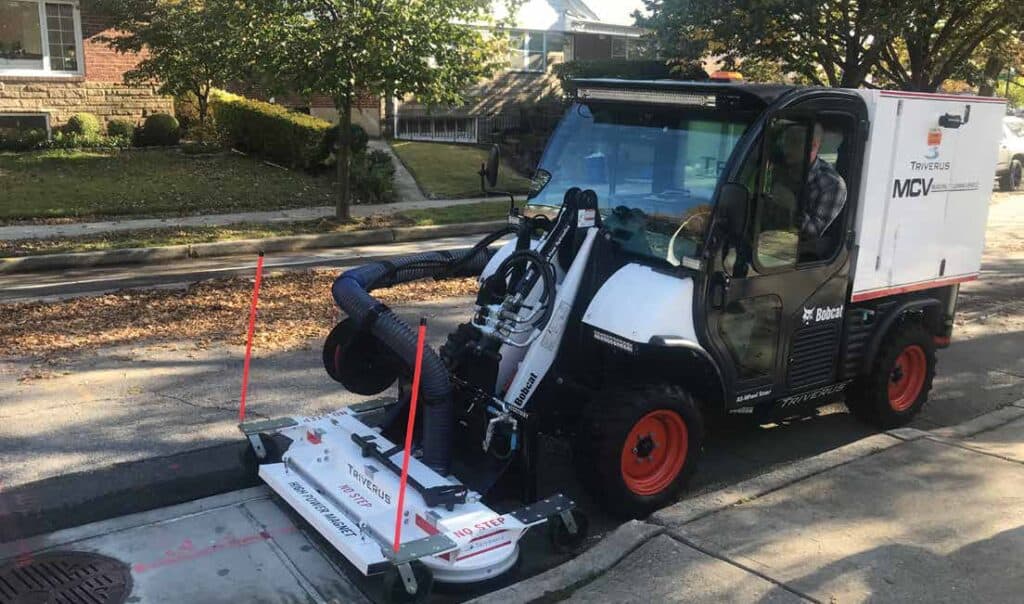
The Triverus Municipal Cleaning Vehicle (MCV) packs high-efficiency cleaning capacity into a compact and versatile standards-based platform. Built for pervious pavement, parking facility and municipal cleaning, it carries the widest cleaning deck in its class (60 inches) and combines high-pressure water spray with simultaneous vacuum recovery to capture contaminated water and debris in a single pass. It cleans with pure water only and does not require chemicals or soap solutions of any kind.
The MCV is built on the same MCRRS cleaning and recovery technology proven in government-sponsored testing to remove, recover and contain more rough and fine solids from underlying surfaces than any mechanical sweeping or low-pressure spray and brush system. Its patented recovery system retrieves virtually all liquid used in the spray process, so wash water does not reach the storm drain, supporting NPDES MS4 compliance and stormwater pollution prevention across municipal, commercial and government sites.
MCV Specification Sheet
Key Features
Pervious & Permeable Pavement
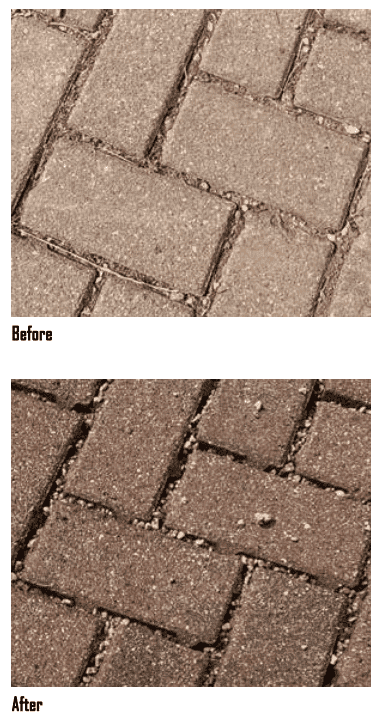
Pervious surfaces (asphalt, concrete and pavers) are intended to sequester pollution and keep it out of the storm water system. As a side effect, they also collect and sequester solids, which in turn can clog the pores to a point where the surface will not percolate water. Solids removal inside these pores and crevices is notoriously difficult. MCV technology is designed to clean these surfaces and recover solids at the same instant to prevent recontamination, and the maintenance or restorative cleaning capability will prevent clogging and restore percolation functionality.
Used as a restorative or maintenance BMP, the MCV can remove stormwater-contributing pollution at a much higher efficiency than conventional sweeping practices, with results proven to far exceed typical vacuum or regenerative air sweeping.
Parking & Urban Facilities
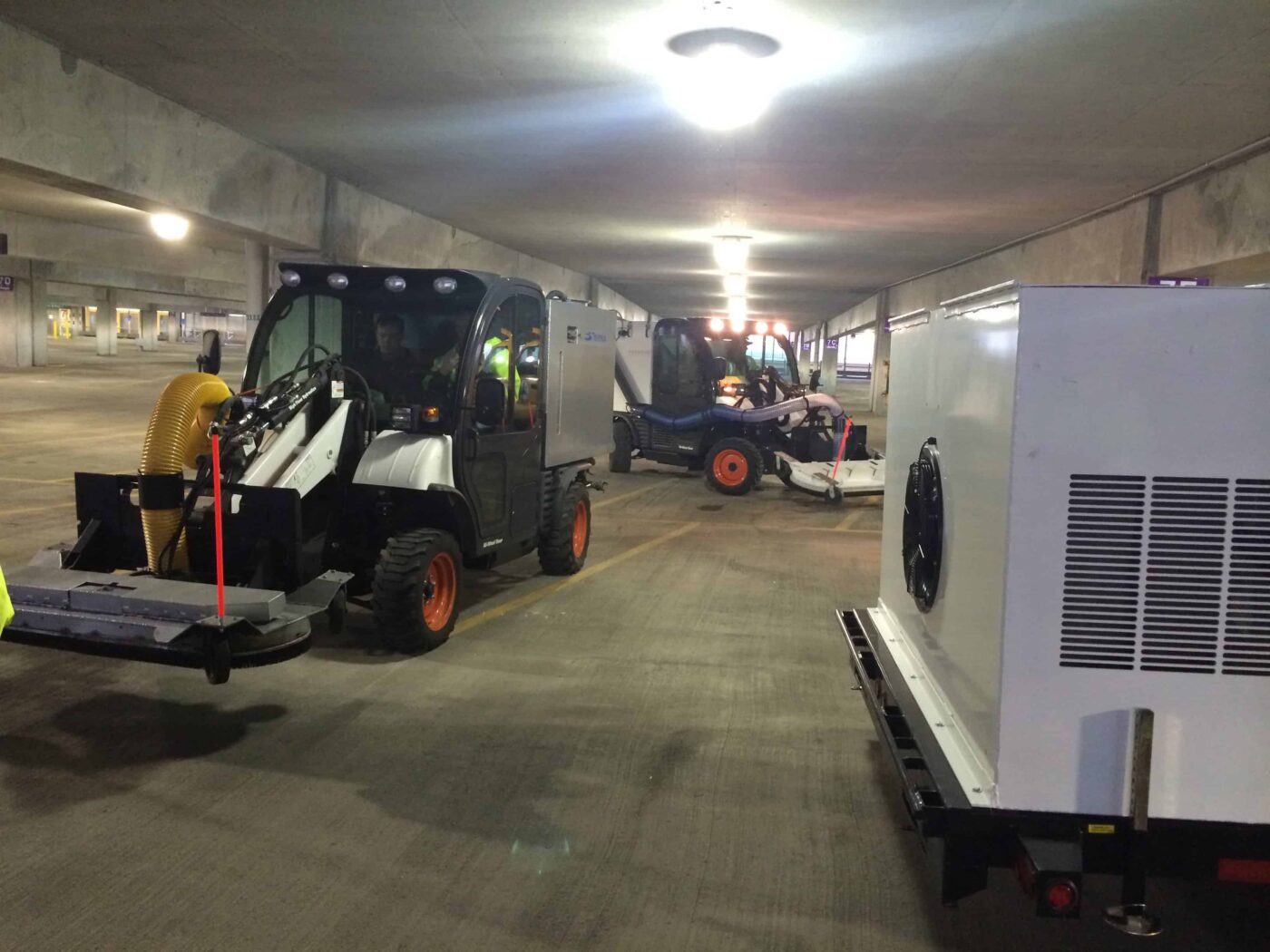
Parking decks, surface lots and urban facilities present tight turning areas, pillars, curbs and complex lane configurations. The MCV has excellent maneuverability: selectable 4-wheel steering allows sharp turning within tight spaces like parking facilities or mixed sidewalk and street spaces, and crab steering lets the operator place the front-mounted cleaning deck at the focus of the work while the rest of the vehicle sits at an angle, for difficult edge work without excessive machine clearance issues.
The out-front cleaning platform reaches into single parking spots, and the on-board recovery system captures the wash water to prevent stormwater discharge.
Airports & Municipal Spaces
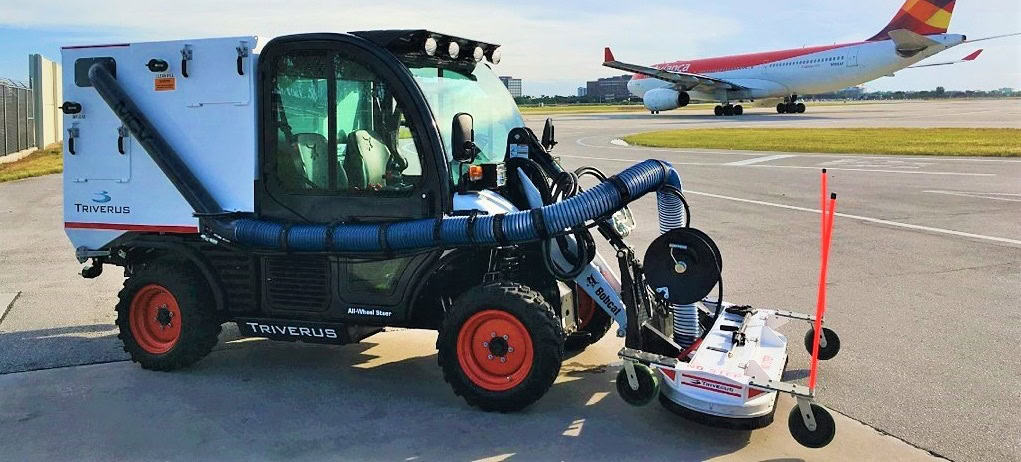
The MCV is built for city cleaning and environmental programs. The chassis is maintainable and familiar to typical grounds and equipment maintenance facilities, and parts and service are readily available for a rigorous daily operations tempo. MCV versatility includes a unique paint preparation function, where pre-paint cleaning removes solids to improve paint adhesion, and jet spray cleanout prior to crack sealing.
For airports and federal agencies, the MCV is available through GSA contract #47QMCA18D000Q.
How It Works
A pressurized water spray attacks surface contamination beneath the 60-inch cleaning deck while a high-volume vacuum (1,000+ CFM) simultaneously recovers the water and dislodged debris, creating a contained cleaning environment that captures what other methods leave behind. Recovered water and solids are held in the on-board recovery tank, and a 50+ GPM offload pump enables a 5-minute fill and waste removal cycle.
University of New Hampshire Stormwater Center, 2019
In 2019, the University of New Hampshire Stormwater Center (UNHSC) independently tested the Triverus MCV on two clogged porous asphalt parking lots in Durham, New Hampshire. Both lots started at an average infiltration rate of 3 in/hr, well below the 10 in/hr threshold for a functioning surface. After cleaning, the West Edge lot averaged 94 in/hr and the Alumni Center lot averaged 84 in/hr, both restored to working condition.
The MCV removed about 150 lbs of coarse sediment from the West Edge lot in roughly 6 hours and 350 lbs from the Alumni Center lot in roughly 4 hours. Laboratory analysis of the recovered solids and water documented removed nutrients and metals, including copper and zinc.
See the MCV in Action
Frequently Asked Questions
Why does the Triverus MCV out-perform other cleaning vehicles in small or congested spaces?
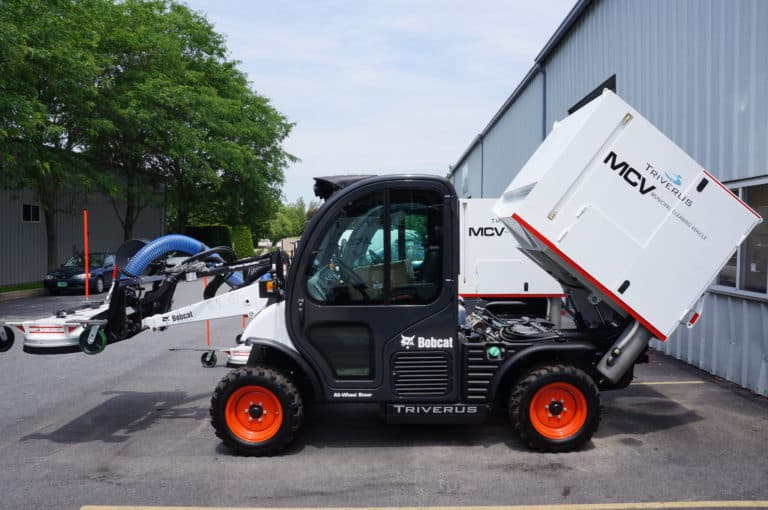
The Triverus Municipal Cleaning Vehicle (MCV) integrates Triverus high-pressure spray cleaning and vacuum recovery technology onto an all-wheel steer carrier. It is designed to fit on a conventional 5 ft sidewalk. A conventional quick hitch allows removal of the cleaning platform in 5 minutes to allow the optional use of dozens of other attachments. This packaging provides maximum flexibility for surface cleaning in congested areas such as downtown streets, walking paths, airport ramps, airside loading bridge areas, terminal areas, walkways, dock areas and enclosed parking structures. An overall height of 81 inches gives the MCV free rein in almost any covered parking area.
How does positioning the cleaning platform in front of the operator benefit the cleaning operation?
The operator has a natural, complete visual of the cleaning operation and it is easily accessed for maintenance. The front position allows the chassis to be used with dozens of additional attachments designed for the multipurpose chassis. Additionally, the out-front cleaning location allows full access to the dirtiest area of a single parking spot, where the engine is generally positioned.
How does the MCV feature the widest in-class cleaning platform yet maintain maneuverability?
The all-wheel steer multipurpose carrier provides 4-wheel coordinated and crab steer as well as independent rear steer mode for closer edge cleaning.
How often should pervious pavement be cleaned with the MCV?
Cleaning frequency depends on surface type, traffic volume and local conditions such as organic matter and tree cover. The Triverus Pervious Pavement Maintenance Guide recommends vacuum-assisted high-pressure water jet cleaning every 6 months and immediately before and after winter, with organic debris removal 2 to 4 times per year (more often for high-use sites or sites near heavy trees). Triverus recommends a site assessment to set the right schedule for each installation.
Does MCV cleaning damage the pervious pavement surface?
The MCV uses the method the Triverus Pervious Pavement Maintenance Guide recommends for restoring pervious pavement: simultaneous pressure washing and vacuuming. Water and loosened material are recovered immediately instead of being pushed deeper into the pores. In independent UNH Stormwater Center testing, the MCV restored two failed porous asphalt lots to functional infiltration rates.
Is the MCV available for purchase or only as a service vehicle?
The MCV is available for direct purchase, including through GSA Advantage (contract #47QMCA18D000Q) for eligible government agencies. Triverus also provides fully staffed cleaning services for organizations that prefer to outsource surface maintenance. Contact Triverus to discuss which option fits your operational model.
What happens to the contaminated water and debris the MCV collects?
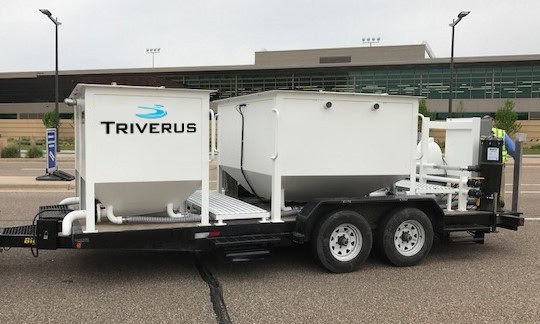
Recovered water and debris go into the MCV’s 200-gallon recovery tank, where a removable tray collects coarse solids. The 50+ GPM offload pump empties the tank in a 5-minute fill and waste removal cycle, and the material is disposed of properly. For large operations, the Triverus Water Treatment Trailer (WTT) can process recovered water on site, extending operational range without water resupply stops.
Can the MCV support NPDES stormwater permit compliance?
Yes. The MCV captures the wash water so no runoff enters storm drains, which directly supports NPDES MS4 permit requirements. UNH Stormwater Center testing documents the MCV’s effectiveness in removing pollutant loads (sediment, metals and organic material). Triverus can provide testing documentation to support your stormwater management plan.