
Pervious Pavement Maintenance Guidelines

Maintenance Guidelines

Complete Pervious Pavement Maintenance Schedule and Procedures

Pervious pavement systems require a structured, multi-phase maintenance program to sustain their stormwater management function over time. Skipping routine maintenance leads to progressive clogging that eventually requires costly deep-cleaning restoration — or surface replacement. Following this schedule preserves infiltration capacity, extends service life, and keeps your facility’s stormwater infrastructure in compliance.

These guidelines apply to all pervious pavement types: pervious concrete, porous asphalt, and interlocking concrete permeable pavers. Maintenance frequencies should be adjusted upward for high-use sites, sites near heavy tree or brush cover, or areas with high potential for runoff contamination.

Maintenance Schedule

Phases, Frequencies, and Required Actions

Monthly

Inspection

Monthly visual inspection keeps you ahead of developing issues before they require costly intervention.

Visually inspect for leaves, pine cones, pine needles, moss, and organic deposits
Check for inorganic solids deposited by rainwater runoff from upland or adjacent areas
Test whether surface maintains satisfactory infiltration — look for puddling or standing water 30 minutes after rainfall ends
Inspect for spalling, raveling, or surface deterioration
2–4× per Year

Routine Maintenance

More frequent for high-use sites, sites near heavy tree or brush cover, or areas with high runoff contamination potential. Also performed as needed based on inspection findings.
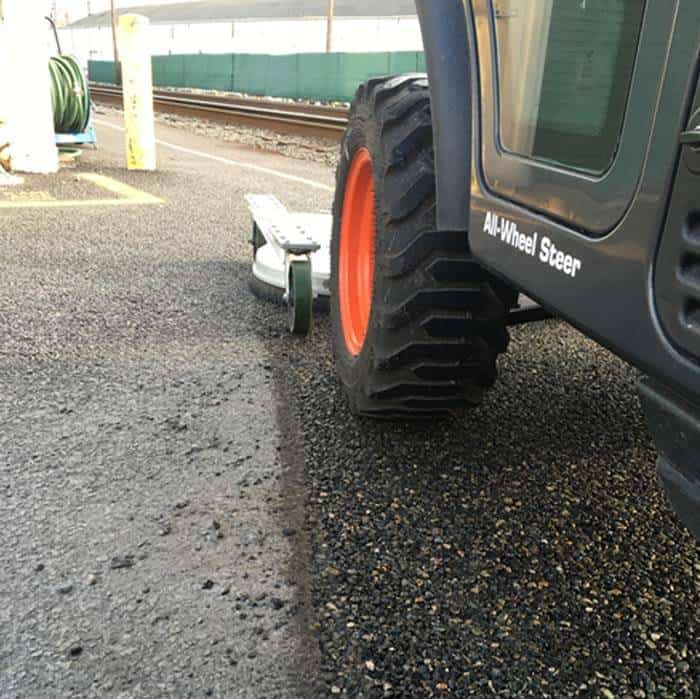
Remove organic deposits using a blower (leaf blower or similar), truck-sweeping, and/or dry vacuuming
Removing deposits before they degrade and break down delays the need for deeper cleaning
Every 6 Months

Periodic Maintenance

Ideally performed immediately before and after winter. This is the most critical scheduled maintenance event for preserving surface permeability and preventing freeze-thaw damage.

Vacuum-assisted high-pressure water jet cleaning removes foreign material and organic debris from both surface and subsurface voids, restoring full percolation
At a minimum, vacuuming should occur after the last snow event of the year and just prior to the first snow event to remove accumulated debris
As Needed

Spot Cleaning

Used to address isolated areas of acute or subsurface clogging identified during inspection or after specific events.

Clay soils: Shop-Vac for small areas, walk-behind vacuum for medium, vehicle-mounted vacuum for larger areas
For acute or subsurface clogging, high-pressure washing combined with vacuuming is more effective than vacuuming alone
Late Fall + Snow Events

Winter Maintenance

Pervious pavement requires different snow and ice management than conventional surfaces. Using the wrong equipment or materials can permanently damage the porous structure.
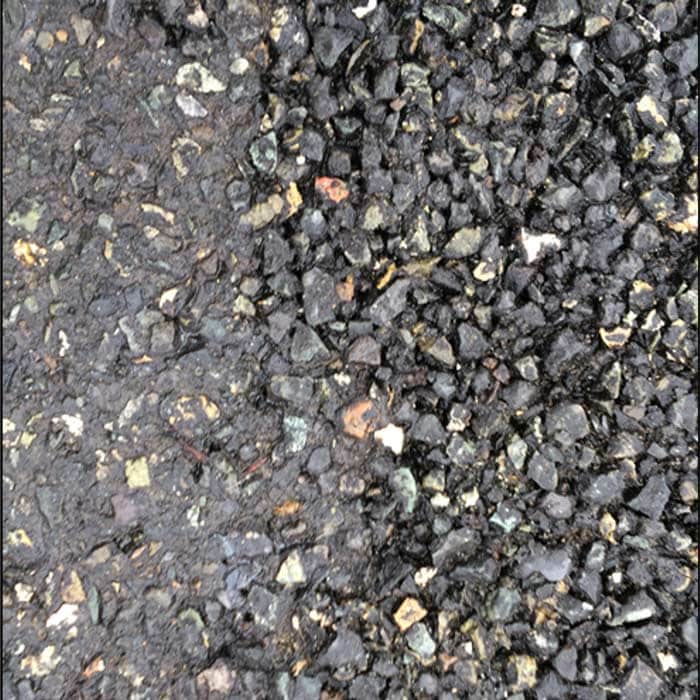
Remove snow with a rotary broom when available
If using a plow, use a non-metallic cutting edge (rubber, rubber composite, or ceramic composite) — metallic edges catch stones and cause raveling
Do not use de-icing chemicals — a properly maintained pervious surface that drains correctly does not develop ice
Small crushed aggregate (1/4–10 or similar) may be used for anti-skid; remove it when winter maintenance ends
Perform aggressive periodic maintenance just before winter to ensure voids are clear and draining
As Needed

Restoration

Required when surface performance has degraded significantly, particularly if routine and periodic maintenance has not been performed. Restoration is accomplished with specialized cleaning equipment capable of simultaneous pressure washing and vacuuming.

Triggered when infiltration rate decreases more than 25% from initial value, or falls below 100 in./hr.
Target post-restoration drainage rate of 100–200 in./hr. per ASTM C1701
Best accomplished using the Triverus MCV with simultaneous pressure washing and vacuum recovery
Chemical cleaning should be used with extreme caution to protect the aquifer, biological organisms within the pervious system, and the pavement structure
Ongoing

Administrative

Documentation and record-keeping are essential for demonstrating stormwater compliance and passing maintenance history to future property owners or operators.

Maintain maintenance logs; record dates, conditions, and results after each service event
Review the maintenance plan annually and adjust based on observed surface performance
When selling or transferring property, pass on the full maintenance history and maintenance plan to the new owner or operator